PLANTOGRAM · CLINICIAN EDUCATION
Multi-Pathway Cannabinoid Therapy: Clinical Framework
Read a clinician-focused framework covering presentation, route, cannabinoid exposure, adjunct evidence, interactions and outcome monitoring.
A framework for clinical reasoning
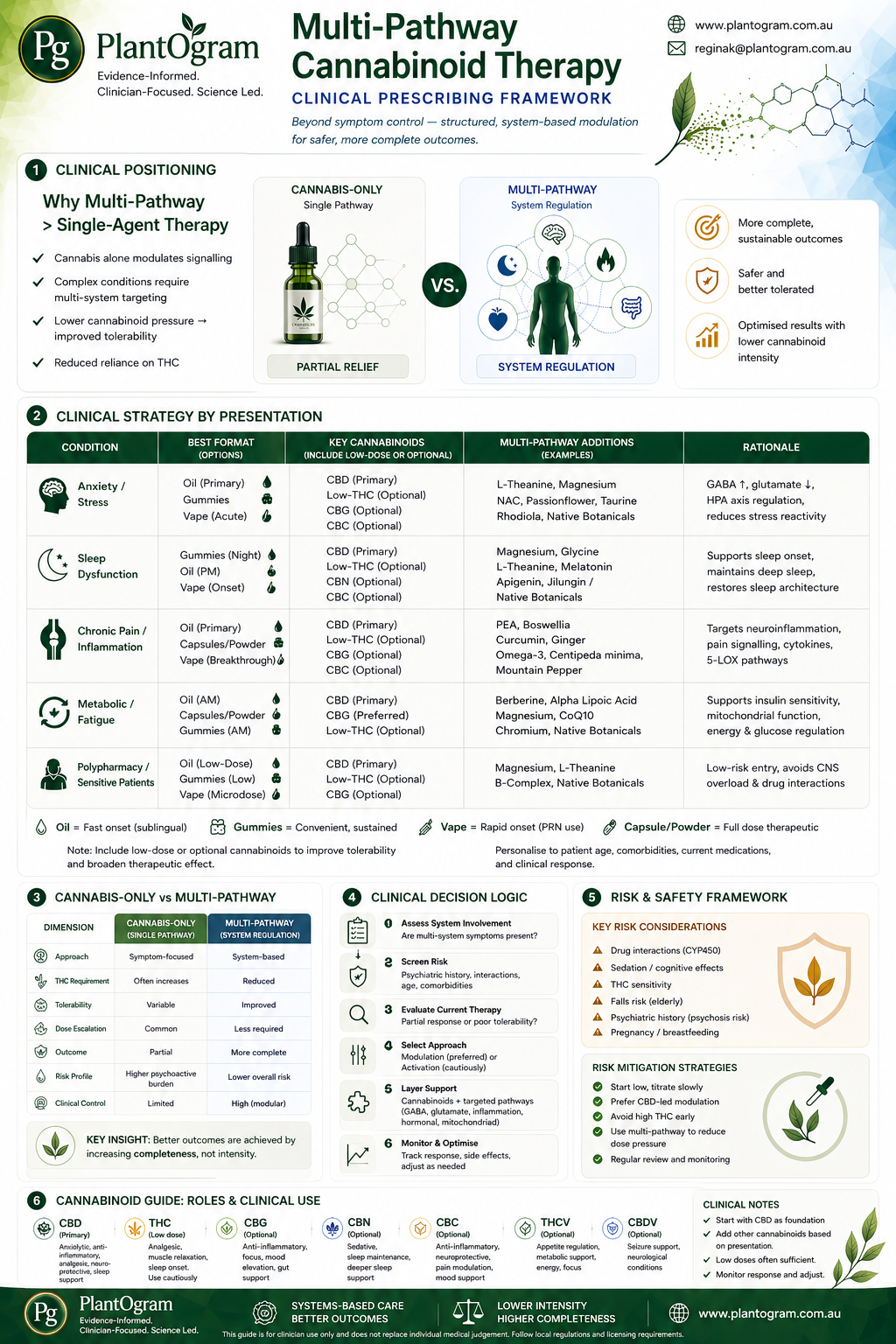
This module translates the multi-pathway concept into assessment and review questions. Its central idea is to consider symptoms, coexisting conditions and treatment burden together. It does not establish that multi-ingredient cannabinoid treatment is safer or more effective than established care.
| Presentation in the illustration | Assessment focus | Adjunct examples shown; not prescribing recommendations |
|---|---|---|
| Anxiety / stress | Diagnosis, psychological care, sleep, substance use, psychiatric history and THC-related symptom worsening. | L-theanine, magnesium, NAC, passionflower, taurine, rhodiola and native botanicals. |
| Sleep dysfunction | Insomnia pattern, circadian factors, sleep apnoea, pain and daytime impairment. | Magnesium, glycine, L-theanine, melatonin, apigenin, inulin and native botanicals. |
| Chronic pain / inflammation | Pain mechanism, physical function, rehabilitation and conventional treatment response. | PEA, Boswellia, curcumin, ginger, omega-3, Centipeda minima and mountain pepper. |
| Metabolic symptoms / fatigue | Underlying diagnosis, anaemia, endocrine disease, sleep and medicine-related fatigue. | Berberine, alpha-lipoic acid, magnesium, CoQ10, chromium and native botanicals. |
| Polypharmacy / sensitive patients | Medication reconciliation, interactions, falls, cognition and cumulative sedation. | Magnesium, L-theanine, B-complex and native botanicals. |
How route changes the clinical question
The image lists oils, gummies, vapes and capsules or powders. Route affects exposure, onset, duration and the ability to adjust a dose. Oral products can have delayed and variable effects. Inhaled exposure differs from oral exposure and has distinct risks. Sublingual oil should not automatically be described as fast acting: technique and the amount swallowed affect absorption.
The image’s suggested acute vape role for anxiety and microdose vape role in sensitive patients are not general recommendations in this text. THC can worsen anxiety and cause impairment; inhaled high-THC treatment requires individual assessment.
Six steps for assessment and review
1. Assess symptoms, diagnoses and relevant systems.
2. Screen risk: psychiatric history, age, comorbidities, pregnancy or breastfeeding, medication interactions and functional responsibilities.
3. Evaluate the current treatment and the reason for partial response or poor tolerability.
4. Select an evidence-informed approach, including established non-cannabinoid care where appropriate.
5. Introduce a justified change with a defined purpose, rather than automatic stacking.
6. Monitor response, adverse effects and function; simplify or stop ineffective treatment.
Risk and safety framework
The image highlights metabolic drug interactions, sedation, cognitive effects, THC sensitivity, falls, psychiatric history and pregnancy or breastfeeding. These risks are not eliminated by a CBD-led formulation or a lower THC percentage. CBD can also interact with other medicines. Driving and work safety require specific discussion.
A review should record the patient’s actual exposure, all prescription and non-prescription products, symptom outcomes, function and adverse effects. Proposed benefits such as reduced THC requirements or fewer adverse effects need confirmation in the individual and in appropriate research.
Cannabinoid roles: distinguish established and emerging evidence
The image lists CBD, THC, CBG, CBN, CBC, THCV and CBDV. Their pharmacology and clinical evidence differ. Proposed pain, sleep, mood, appetite, metabolic or neurological effects should not be treated as established indications for every cannabinoid. Minor-cannabinoid and terpene findings often remain preliminary, and a mechanism is not a demonstrated clinical outcome.
Source resource
Download Multi-Pathway Cannabinoid Therapy: Clinical Framework
Further reading
- TGA: accessing medicinal cannabis for a patient
- TGA: information directed exclusively to health professionals